

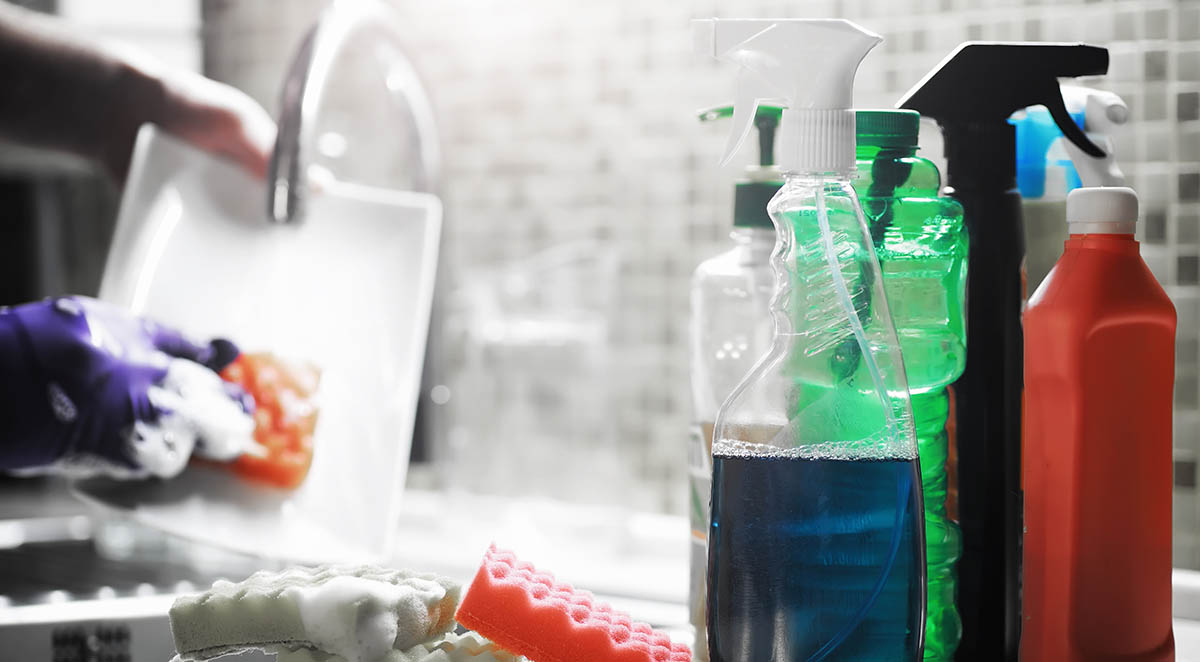
Many household cleaners contain harsh ingredients that can affect your health, your indoor air, and the environment. Understanding the dangers of chemical cleaning products helps you make better choices about what you use in your home every day. This guide explains which harmful chemicals in household cleaners to watch for, how they can affect your family, and which non-toxic cleaning alternatives offer a safer path forward.
At Greenlife Professional Cleaning, our team has provided green cleaning services to homes in the Asheville and Hendersonville areas for more than 13 years. The information below reflects what we have learned about effective, non-toxic cleaning during that time.
Quick Summary
- Common ingredients in conventional cleaners include chlorine, phenol, ammonia, and formaldehyde.
- According to the EPA, indoor air can be two to five times more polluted than outdoor air, largely due to chemicals in household cleaners and pesticides.
- Conventional cleaning products can trigger allergies, respiratory issues, and skin irritation.
- Chemical cleaners washed down drains can contaminate water supplies and harm aquatic life.
- Simple ingredients like vinegar, baking soda, and castile soap make effective non-toxic alternatives for many everyday tasks.
- Greenlife uses eco-friendly products, HEPA-filtered vacuums, and reusable microfiber cloths to reduce chemical exposure and waste.
Harmful Chemicals in Household Cleaners
Many everyday cleaning products rely on strong chemical agents to cut grease and kill germs. Knowing what sits in your cleaning cabinet is the first step toward reducing your family's exposure.
Common Ingredients to Watch For
When you read the labels on conventional cleaners, these ingredients appear often:
- Chlorine
- Phenol
- Ammonia
- Formaldehyde
- Phosphates
- Sulfates
- Artificial fragrances
Many of these chemicals are associated with a higher risk of health problems, including allergies, asthma, birth defects, immune system disorders, and ADHD. Checking labels before you buy is one of the simplest ways to keep these substances out of your home.
How Cleaning Chemicals Affect Indoor Air
The Environmental Protection Agency (EPA) reports that the air inside our homes is two to five times more polluted than the air outside, largely because of chemicals found in household cleaners and pesticides. Many traditional cleaners release volatile organic compounds (VOCs) that lower indoor air quality. In energy-efficient homes, these pollutants can linger for an extended period.
Ventilation helps reduce the problem. Using disinfectants in poorly ventilated areas can release harmful fumes, so opening windows or running fans lowers your exposure to airborne chemicals.
Toxic Cleaning Products Health Risks
The health risks conventional cleaning products carry affect people in different ways. The sections below cover the most common concerns.
Respiratory Issues and Allergies
Conventional cleaning products often contain harsh chemicals that can trigger allergies and respiratory issues. Fumes from sprays and disinfectants are a particular concern for people who have allergies or asthma. Green cleaners produce fewer fumes, which helps reduce these respiratory risks.
Skin Irritation and Direct Contact
Harsh chemicals can also cause skin irritation. Wearing disposable gloves protects your hands from both chemicals and contaminants, and washing your hands afterward helps prevent cross-contamination.
Risks for Children and Pets
Young children and pets often come into direct contact with recently cleaned surfaces, from floors to low tables. Natural cleaning solutions are typically safer for these households. Non-toxic formulations free of dangerous chemicals give parents and pet owners more peace of mind.
Chemical Cleaning Products Harmful Effects on the Environment
The impact of chemical cleaners continues after you finish cleaning. When these products wash down drains, they can contaminate water supplies and harm aquatic life. Disposable paper products used alongside them also add to household waste.
Eco-friendly products help on both fronts. Many green cleaning products are biodegradable and come in sustainable packaging, and reusable tools cut down on what ends up in the trash.
Green Cleaning vs Chemical Cleaning
Comparing the two approaches side by side makes the differences clear:
- Air quality: Many traditional cleaners release VOCs, while green cleaners produce fewer fumes.
- Personal health: Harsh chemicals can trigger allergies, respiratory issues, and skin irritation, while natural alternatives reduce these risks.
- Household safety: Natural solutions are typically safer for homes with young children and pets.
- Environmental impact: Chemical cleaners can harm water supplies and aquatic life, while many green products are biodegradable.
- Effort: Some natural methods require a bit more time or elbow grease than harsh chemicals.
Natural cleaners like vinegar have antimicrobial properties, though they may not kill every type of bacteria and virus. For surfaces that need disinfection, such as cutting boards and bathroom fixtures, you can use vinegar solutions with tea tree oil added or hydrogen peroxide, applied separately from vinegar.
If you are considering hiring a housecleaning company, read our blog about the questions to ask before hiring.
Non-Toxic Cleaning Alternatives for Your Home
Switching to safe cleaning products for home use does not require specialty items or a large budget. A few basic ingredients cover most everyday cleaning tasks.
Basic Supplies for Safer Cleaning
These items form the foundation of a non-toxic cleaning kit:
- White vinegar: A natural disinfectant and deodorizer
- Baking soda: Useful for scrubbing and deodorizing
- Lemon juice: Offers natural antibacterial properties and a fresh scent
- Castile soap: A plant-based, biodegradable soap
- Essential oils: Tea tree, lavender, or lemon add antimicrobial properties and pleasant scents
- Microfiber cloths: Reusable and effective at capturing dust and dirt
For recipes using these ingredients, including an all-purpose cleaner, a glass cleaner, and a bathroom scrub, read our eco-friendly home cleaning tips.
How to Make the Switch
A gradual transition makes green cleaning easier to maintain:
- Start with all-purpose cleaners. These are the products you use most often, so replacing them first can significantly reduce your exposure to harsh chemicals.
- Replace products as they run out. Swapping one item at a time avoids waste and spreads out the cost.
- Read labels carefully. Look for biodegradable, plant-based ingredients and avoid products with phosphates, chlorine, artificial fragrances, and sulfates.
- Test new solutions first. Try homemade cleaners in an inconspicuous area before using them on delicate surfaces.
- Invest in quality tools. Good microfiber cloths, durable spray bottles, and proper brushes make eco-friendly cleaning more effective.
Safety Notes for Natural Cleaners
Natural products still require care. Vinegar should not be used on marble, granite, stone tile, or waxed or unfinished hardwood, because its acidity can damage these surfaces. Store homemade cleaners in labeled glass containers away from sunlight and heat, and make small batches, since most last one to two weeks.
Eco-Friendly Cleaning Product Benefits With Greenlife
Greenlife provides green cleaning services to residents who are concerned about harsh cleaning chemicals and want to reduce their environmental footprint. When you choose our green cleaning services, our team uses a line of natural cleaning products along with high-quality commercial equipment.
Our approach includes several specific practices:
- Eco-friendly soaps to clean hardwood surfaces
- HEPA filters in our vacuums to capture small particles like pollen and dust mites
- Microfiber cloths in place of paper towels, used once in your home and then laundered for reuse
- Team-based cleaning with trained, uniformed staff who bring all the supplies needed
Microfiber cloths remove dirt and germs more effectively than cotton cloths and last longer, which reduces waste and environmental impact.
Services Built Around Green Cleaning
Our eco-friendly methods carry across the services we offer:
- Residential cleaning: Weekly, biweekly, and triweekly service covering bathrooms, kitchens, bedrooms, and every other room.
- Post-construction cleaning: Non-toxic, eco-friendly floor-to-ceiling cleaning after a home improvement or new construction project.
- Restaurant cleaning: Monthly maintenance and floor care, including green cleaning according to LEED standards.
Why Use Non-Toxic Cleaning Products With a Trusted Team
With Greenlife, you can count on the following:
- We are locally owned in Asheville.
- We are licensed, bonded, and insured.
- Every member of our cleaning staff must pass a thorough background check.
- We offer a 100% satisfaction guarantee every time.
- Hablamos Español.
Frequently Asked Questions
What are the most common harmful chemicals in household cleaners?
Common ingredients include chlorine, phenol, ammonia, and formaldehyde. Many cleaners also contain phosphates, sulfates, and artificial fragrances, which are worth avoiding when you shop.
Why are cleaning chemicals a concern for indoor air?
According to the EPA, indoor air is two to five times more polluted than outdoor air, largely due to household cleaners and pesticides. Many conventional products release VOCs that lower indoor air quality.
Are natural cleaners as effective as chemical cleaners?
Natural cleaners work well for most everyday tasks, though some require a little more time or effort. Vinegar has antimicrobial properties but may not kill every type of bacteria and virus, so high-touch surfaces may need a stronger disinfecting approach.
What should I replace first when switching to green cleaning?
Start with your all-purpose cleaner. Because you use it throughout your home, replacing it can make the biggest difference in reducing your exposure to harsh chemicals.
Does Greenlife bring its own cleaning supplies?
Yes. Our trained, uniformed team brings all the cleaning supplies needed, including eco-friendly products, HEPA-filtered vacuums, and microfiber cloths.
Choose Safer Cleaning for a Healthier Home
The chemicals in conventional cleaners can affect your breathing, your skin, your indoor air, and the water supply. Switching to non-toxic products and safer habits reduces these risks for everyone in your household, including children and pets.
If you would like a clean home without harsh chemicals, Greenlife Professional Cleaning can help. Our team combines green cleaning methods with years of experience to deliver results you can see and feel. Contact us today for a free estimate, or call 828-424-7384 to schedule your eco-friendly cleaning service.